Answers to Your Questions

KE retractable awnings are built to order, giving homeowners and businesses flexible shade solutions tailored to their space.
  • Width: 3'8" up to 46', sized precisely for patios, decks, storefronts, and outdoor seating areas
  • Projection (how far the awning extends): 5'3" to 15'11", depending on the awning model
These custom retractable awnings maintain a slim architectural profile that complements both modern and traditional buildings. KE does not manufacture products for moving vehicles or non-permanent structures.
Retractable awnings require minimal winter maintenance, but a few simple steps will protect the fabric and mechanical components during colder months.
  • Clean the awning fabric and allow it to dry completely before retracting it for winter.
  • Fully retract the awning when snow, freezing temperatures, or strong storms are expected.
  • Models with a full cassette, semi-cassette, or hood help shield the rolled fabric from debris, animals, and moisture.
  • Consider installing wind sensors or weather automation systems that automatically retract the awning during severe weather.
These simple winter care steps help extend the lifespan of your retractable awning system.
Retractable awnings are engineered for sun protection and light weather exposure but should be closed during strong wind conditions.
  • KE retractable awnings are tested to withstand winds up to 45 MPH while open.
  • When the awning is fully closed, the system can withstand winds up to 90 MPH.
  • Optional automatic wind sensors can retract the awning when wind thresholds are reached.
For maximum safety and durability, retract the awning whenever storms or high winds are expected.
Choosing the right retractable awning involves evaluating both performance and design features. Key factors to consider include:
  • Awning size and projection for proper shade coverage
  • Manual vs. motorized operation for convenience and automation
  • Fabric durability and UV resistance
  • Frame construction and corrosion resistance
  • Wind and sun sensors for automated protection
  • Mounting surface and installation location
  • Manufacturer warranty and long-term reliability
A professional dealer can help evaluate these factors and recommend a retractable awning system that fits your outdoor space and budget.
Most retractable awning installations require at least 7 ft 6 in of vertical clearance to ensure the proper pitch and comfortable headroom underneath the shade. Because mounting height, slope, and projection affect installation requirements, your KE dealer will measure your patio, deck, or exterior wall to determine the correct awning size and mounting location.
Many retractable awnings and pergola shade systems can be enhanced with accessories that improve comfort and usability. Popular upgrades include:
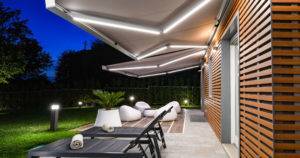
  • Integrated LED lighting systems
  • Remote control and smart automation integration
  • Wind, rain, and sun sensors
  • Outdoor patio heaters
  • Bluetooth speakers for outdoor entertainment
These upgrades help transform patios, decks, and outdoor dining spaces into comfortable all-day living areas.
In many cases, building permits are not required for residential retractable awnings or roof canopy systems. However, local municipalities or Homeowners Associations (HOAs) may have guidelines related to appearance, size, or placement. Some jurisdictions may request installation drawings or product specifications during approval. Your KE dealer can assist with documentation and help confirm whether local permits or approvals are needed before installation.
A high-quality retractable awning can last 10–15 years or longer when properly maintained. The frame components are typically built from durable aluminum or steel, while modern awning fabrics are engineered to resist UV damage, fading, and mildew. Regular cleaning, retracting the awning during storms, and using wind sensors can significantly extend the system’s lifespan.
Retractable awnings are designed for sun protection. During heavy rain or storms, the awning should be retracted to prevent water pooling or structural stress.
Motorized retractable awnings are popular because they offer greater convenience and protection compared to manual systems. With the push of a button or smartphone control, the awning can extend or retract quickly. Many motorized systems also integrate with wind, rain, and sun sensors, allowing the awning to adjust automatically based on weather conditions.
Yes. Retractable awnings can reduce solar heat gain through windows and glass doors, helping keep indoor spaces cooler during hot weather. By shading windows and patios, awnings can lower indoor temperatures and reduce the demand on air conditioning systems, improving overall energy efficiency.
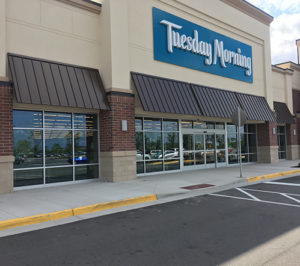
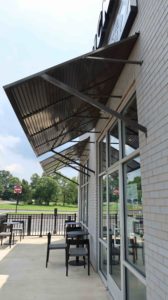
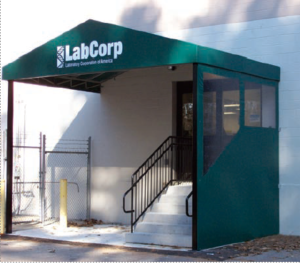
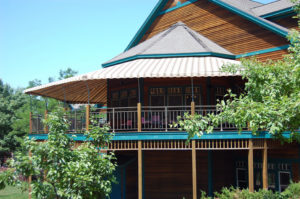
The main difference is flexibility. Retractable awnings can extend or retract as needed, allowing you to control sunlight and shade throughout the day. Fixed awnings remain permanently installed and provide constant coverage. Retractable systems are often preferred for patios, decks, and outdoor dining areas where adjustable shade is beneficial. Stationary awnings are designed to be in place permanently, in all weather conditions. They are much more durable than retractable awnings.
Most homes and commercial buildings can support retractable awning installation as long as there is a stable mounting surface such as exterior walls, soffits, or roof beams. A professional installer will evaluate the structure, available clearance, and mounting options to determine the best installation approach.